
DPDP Act (2023) gives individuals the right to decide how their personal data is collected and used. For many businesses, this means reworking longstanding data practices, notes Ravi Duvvuru.

Showing the power social media influencers hold in the advertising industry today, the Advertising Standards Council of India (ASCI) on Thursday said 70 per cent of Indians are likely to buy a product they endorse. In its "Influencer Trust Report," based on a survey of 820 respondents above 18, ASCI said that 79 per cent of respondents trust social media influencers. Out of these, thirty per cent trust the influencers "completely".

The Central Consumer Protection Authority (CCPA) has issued notices to five e-commerce entities, including Amazon, Flipkart and PaytmMall, as well as various sellers for offering pressure cookers that are non-compliant with BIS norms. The notices were issued on November 18 to Flipkart, Amazon, Snapdeal, Shopclues and PaytmMall, and the sellers. As part of celebrations of 75 years of Independence - 'Azadi ka Amrit Mahotsav', CCPA has initiated a country-wide campaign to prevent sale of spurious and counterfeit goods that violate Quality Control Orders published by the Centre, the government said in a statement on Monday.
The Central Consumer Protection Authority (CCPA) on Wednesday said it has imposed a penalty of Rs 1 lakh on e-commerce firm Flipkart for allowing sale of substandard domestic pressure cookers on its platform, in violation of mandatory standards. Headed by Chief Commissioner Nidhi Khare, the CCPA has directed Flipkart to recall all such 598 pressure cookers sold on its platform, reimburse their buyers, and submit a compliance report within 45 days. The central government routinely notifies the Quality Control Orders (QCOs), specifying compulsory conformity to a standard and use of the standard mark for a product to protect consumers from the risk of suffering injury and harm and in the interest of the public at large.

Suddenly, the legendary advertising line -- a diamond is forever -- is losing its shine.

The ministry has proposed similar penalty and jail term for adulteration, besides license suspension and cancellation

The government on Thursday said 18,600 toys have been seized in the last one month from major retail stores, including those of Hamleys and Archies, at airports and malls across India for lack of BIS quality mark and use of fake licences. Meanwhile, consumer protection regulator CCPA has also issued notices to three major e-commerce players -- Amazon, Flipkart and Snapdeal -- for alleged violation of toys quality control order, it said. Since January 1, 2021, the government has made it mandatory for toys to conform with safety norms specified by the Bureau of Indian Standards (BIS), a national standard setting body.
The government on Monday asked online food business operators like Swiggy and Zomato to submit a proposal within 15 days on improving their consumer grievance redressal mechanism amid rising complaints from customers. The department of consumer affairs directed e-commerce FBOs "to transparently show consumers the breakup of all charges included in the order amount such as delivery charges, packaging charges, taxes, surge pricing etc." According to an official statement, "The Department of Consumer Affairs has directed major e-commerce Food Business Operators (FBOs) to furnish the current framework as well as a proposal on improving the consumer grievance redressal mechanism within 15 days."
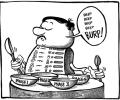
Amid rising consumer complaints, the Central Consumer Protection Authority (CCPA) on Monday barred hotels and restaurants from levying service charge automatically or by default in food bills and allowed customers to file complaints in case of violation. The CCPA has issued guidelines for preventing unfair trade practices and violation of consumer rights with regard to levying of service charge. "No hotels or restaurants shall add service charge automatically or by default in the bill," CCPA chief commissioner said in the guideline.

Greenwashing is making misleading or false environment-friendly claims about a product. Consumers in India currently do not have any way of telling whether a claim is authentic or greenwashing. And one never hears of action against any company for making false claims of being environment-friendly.

Recently, an Air India flyer sent a legal notice to the airline seeking damages of Rs 30 lakh for the breach of personal data of 4.5 million passengers, including her husband and herself. Air India had informed the complainant of the data leak a month earlier, after it emerged that its passenger service system provider fell prey to a cyberattack in February. However, in the absence of a data protection law, India lacks a mechanism for compensation or grievance redress of consumers in such cases, say experts. Advocate Virag Gupta, a New Delhi-based cyber law expert, explains that a legal notice is a good beginning in the Air India case, but it raises many questions. These include whether sensitive personal information has been leaked and whether the airline is responsible or not, given that a passenger service system provider was also involved.

With hotels and restaurants being barred from levying service charge, waiters, chefs and other workers are worried they will lose out on money and are planning to approach managements to seek a pay raise. They are also apprehensive that tips given by customers out of goodwill will dwindle. Uttarakhand-native Prakash Singh Koranga, 27, a chef who works at an outlet of popular franchise Moti Mahal Deluxe restaurant in south Delhi, said service charge which gets proportionally divided among the staff acts as an "extra income" and "incentive to give our best at the job".

Unprecedented bribery charges, farewells, separation, failed union, monumental mergers and record-breaking IPOs, along with a healthy dose of online happenings in the form of spat and lessons in customer care, corporate India saw it all in 2024.

Expanding the scope of its hearing in the Patanjali Ayurved case, the Supreme Court on Tuesday took a stern view of misleading advertisements by Fast-Moving Consumer Goods (FMCG) firms and asked three Union ministries to inform it about the steps they have taken to curb the practice which takes 'public for a ride' and adversely affects their health.

The Union government on Tuesday said it has issued 202 notices to e-commerce players for incorrect declaration of 'country of origin' on products on their platforms in the last one year. The maximum number of such violations were found with respect to electronic appliances, followed by clothing and home products. Out of 217 notices, 202 notices were issued for violations relating to 'country of origin' norm.

The highest-ever goods and services tax (GST) evasion has been done by the online money gaming industry.

Uber has come up with a technology integration feature called "emergency assistance" that aims to provide public safety authorities with real-time actionable data in case of an emergency during a ride. In the event of an emergency, riders or drivers will be able to share their live location, which shall be updated every four seconds, along with their name and contact details at the swipe of a button on the Uber app with the police. This will lead to saving critical time by providing potentially life-saving assistance by the police.

With a report on Uber by the International Consortium of Investigative Journalists (ICIJ) opening a Pandora's box, the company is in a damage-control mode. Distancing itself from the actions of its management pre-2017, Uber, while acknowledging the "mistakes" of the past, has said that under CEO Dara Khosrowshahi, it "is a different company". "There has been no shortage of reporting on Uber's mistakes prior to 2017.

The controversy has sparked reactions across states. The famous Mankameshwar temple in Uttar Pradesh has now banned offerings of 'prasad' bought by devotees from outside and said they can offer homemade 'prasad' or fruits.

In the Union Budget for Financial Year 2023-24 (FY24), Finance Minister Nirmala Sitharaman had held forth on the need for better governance and investor protection in the banking sector. She had proposed certain amendments to the Reserve Bank of India Act (RBI Act), 1934; the Banking Regulation Act (BR Act), 1949; and the Banking Companies (Acquisition and Transfer of Undertakings) Act, 1970.

If as critics point out, the environmental impact assessment study was commissioned only after the auction process got underway with not all the stakeholders getting to know of it, then the government has already compromised the trust it could have enjoyed with Kerala's public including its coastal communities, points out Shyam G Menon.
Uber Technologies said it is doing a fresh round of recruitment for its India tech centres and is planning to hire 500 more tech employees by December. The app-based mobility and delivery company has a 1,000-member tech team across its centres in Hyderabad and Bengaluru. The firm said the hiring plan is a testament to Uber's commitment to India, and its recognition of the engineering talent in the country. Uber hired 250 engineers to its India teams in 2021.

The deposit has been made on account of the rate reductions approved by the GST Council in its November. The rate was reduced on items including shampoo, detergents, chocolates, beauty products, sanitary ware, leather clothing, cookers, stoves, after-shave, deodorant, detergent and washing power. Companies found it difficult to pass on the benefits to consumers immediately at the time of GST rate reduction owing to logistical issues.

The Enforcement Directorate (ED) has attached assets worth over Rs 757 crore of one of the country's most known multi-level marketing (MLM) and direct-selling companies, Amway India, as part of a money-laundering investigation. The central agency issued a statement on Monday, alleging that the company was perpetrating a "scam" by running a pyramid "fraud" in the guise of direct-selling MLM network. "The entire focus of the company is about propagating how members can become rich by becoming members. There is no focus on the products. "Products are used to masquerade this MLM pyramid fraud as a direct-selling company," the ED alleged.

The National Informatics Centre uses AI to automate document analysis and detect fraud in government departments.
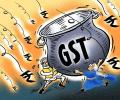
All GST anti-profiteering complaints would be dealt with by the Competition Commission of India (CCI) from December 1 as the extended tenure of National Anti-profiteering Authority ends this month, an official said on Tuesday. A notification in this regard is expected to be issued by the finance ministry later this month, the official added. The National Anti-profiteering Authority (NAA) was set up in November 2017 under Section 171A of Goods and Services Tax (GST) law to check unfair profiteering activities by registered suppliers.

'Shark fins are the most sought-after shark product.'
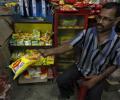
Nestle India had re-launched Maggi earlier this month with a mandate of being safe for consumption amid much fanfare

The RBI refuses to classify a cryptocurrency as an asset since it doesn't have future cash flow and its value is always fluctuating because of speculation. There is also no consumer protection, observes Tamal Bandyopadhyay, and hence the e-rupee trial run.

...benefiting 350,000 persons. Also, Trai detected and blocked seven million mobile phone connections involved in cyber fraud and suspicious activities.

'Modi knows the people here are opposed to this project, but he is using the might of government to push this port down our throats.'
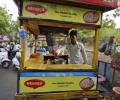
The SC bench said the report of CFTRI, where the samples of Maggi noodles were tested following earlier orders of the court, will form the basis for the proceedings before the NCDRC.

From toys, footwear and furniture to insulated flasks, smart meters, and air coolers - the Central government over the last decade has mandated higher standards for production and imports of such items. Sample this: Till 2014, there were 14 Quality Control Orders (QCOs) covering 106 products. By the latest count, there are 156 QCOs on 672 products.

The apex court bench, also comprising justices Sanjiv Khanna, BR Gavai, JB Pardiwala, and Manoj Misra, will assemble at 10.30 am to hear the two petitions.
The bench, headed by Chief Justice D Y Chandrachud, will also hear a separate plea which has sought initiation of contempt action against the SBI alleging it "wilfully and deliberately" disobeyed the apex court's direction to submit details of the contributions made to political parties through electoral bonds to the Election Commission by March 6.

The economy is gaining traction with gradual pick up in manufacturing activity and moderation in contraction of services, spurred by comfortable liquidity conditions, an RBI article on Tuesday said. Observing that the retreat of the second wave of coronavirus pandemic has been slow, the RBI in an article on the 'State of Economy' said, the aggregate demand conditions are buoyed by the release of pent-up demand post unlock, while the supply situation is improving with the monsoon catching up to its normal levels and sowing activity gaining pace. "Reaffirming the traction that the economy is gaining, the manufacturing activity is gradually turning around, while contraction in services has moderated.
The regulator said that it is vested within its purview to regulate the bank account for payment systems and the settlement systems are finally posted in the books of account of banks with the RBI to attain settlement finality.
We are looking at bringing quality control orders for mass production items such as smart meters and ceiling fans. This will benefit our own industry and consumers, a government official said.

Ashok Kumar Gupta, chairman of the Competition Commission of India (CCI), has never minced words while talking about the giant technology companies, referring to them on multiple occasions as "centres for entrenched and unchecked dominance". The anti-trust regulator has, in fact, been cracking down on big technology companies such as Google, Apple, Facebook, and others, after they were hauled up by regulators and lawmakers in Europe and Australia. However, in several instances, existing regulations have prevented the CCI from going all out against these companies for anti-competitive activities.
